A fragile but historic U.S.–Iran peace memo Trump signed at Versailles could both reopen the Strait of Hormuz and hand Tehran huge leverage over America’s security and wallet.
Story Snapshot
- Trump confirmed he signed an initial peace memorandum with Iran during a Versailles visit, aimed at ending the war and reopening the Strait of Hormuz.
- The 14‑point plan promises toll‑free oil shipping for a limited time, while starting 60 days of talks on Iran’s nuclear program and sanctions relief.
- Reports say Iran will dilute enriched uranium in exchange for waivers on tough sanctions and access to a massive reconstruction fund.
- Critics warn this is only a temporary “framework,” not lasting peace, and that Iran can still walk away while keeping gains.
Trump’s Versailles Signing: What Was Agreed – And What Wasn’t
Donald Trump told reporters he signed an initial peace agreement with Tehran while at the Palace of Versailles, during a dinner with French President Emmanuel Macron and on the sidelines of the G7 summit.[3] The document is a memorandum of understanding, not a full treaty, but it is meant to end active fighting, reopen the vital Strait of Hormuz, and outline a $300 billion reconstruction fund for Iran’s battered economy.[3][5] For many conservatives, that last piece raises red flags about who pays and who gains.
U.S. officials speaking on background said Washington and Tehran had already electronically signed the memo days earlier, and that Trump added his signature again at Versailles.[1] They described the text as “final” in its current form but admitted both sides can still walk away until a permanent deal is reached after a 60‑day negotiation window.[1] That means the memo stops the bleeding for now, yet it does not lock Iran into long‑term behavior change, especially on nuclear work and terror proxies.
Strait of Hormuz: Energy Lifeline Reopened, But On Whose Terms?
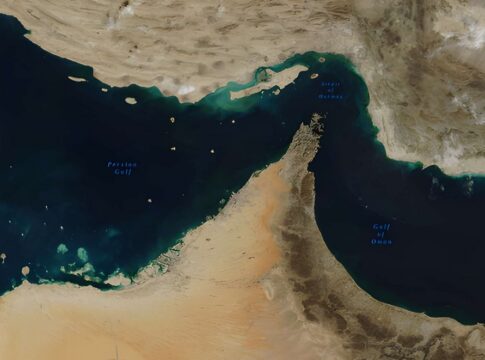
The Strait of Hormuz has been the choke point at the center of this war, with about one‑fifth of the world’s oil once passing through its narrow waters.[1] Under the new memorandum, the United States commits to ending its naval blockade and Hormuz will reopen to maritime traffic, with U.S. officials promising toll‑free passage for 60 days.[1][5] That is a relief for American families crushed by energy prices, but it is also a ticking clock if Iran chooses to re‑weaponize the strait after the window closes.
Trump has repeatedly vowed that reopening Hormuz is non‑negotiable and linked it to destroying Iran’s highly enriched uranium stockpile.[2][7] Yet Iranian voices have pushed back in past reporting, insisting they will keep “management” of the waterway and may still impose conditions or fees in the future.[1][5] This gap between U.S. and Iranian descriptions shows why many experts call the memo an interim step that restores some oil flow but does not fully settle who truly controls the global energy lifeline.[4][22]
Uranium, Sanctions, and the $300 Billion Question
The deal’s nuclear and economic pieces carry the biggest long‑term stakes for U.S. security and taxpayers. According to European and U.S. reporting, Iran agrees to dilute its enriched uranium, likely by down‑blending on site under United Nations nuclear watchdog supervision, while talks continue on deeper limits to its nuclear program.[5] In exchange, Washington will immediately waive key oil sanctions that have been choking Iran’s economy, and later help unlock a $300 billion reconstruction fund backed by regional partners.[5]
Senior U.S. officials have also described the wider 14‑point plan as including an official declaration to end the war, extend ceasefires in Iran and Lebanon, and gradually lift some sanctions as Iran complies.[4][22] Supporters argue this is “peace through strength,” forcing Tehran to back down under military and economic pressure, then locking in limits on uranium and rockets. Skeptics see a familiar pattern from the old Iran nuclear deal era: front‑loaded relief, back‑loaded promises, and a regime that has cheated before and could do so again once cash starts flowing.
Framework or Finished Peace? Why This Memo Is Just the Opening Round
Analysts across the spectrum stress that what Trump signed is a memorandum of understanding that launches a fresh round of hard bargaining, not a final, comprehensive peace accord.[4][6][22][23] The agreement extends and codifies ceasefires and reopens shipping lanes while setting up a 60‑day period of intense talks on the toughest issues, from nuclear limits to sanctions relief and regional militias.[4][22] Even supportive voices describe it as a “framework” or “launchpad” rather than a settled solution that ends the Iran threat for good.[4][22][23]
==> IRAN / USA MOU.. let me cut through all noise from Dems and some Repubs.
What the MOU Actually Is:
It's a preliminary/interim framework (often called the "Islamabad Memorandum of Understanding" in reports), not a final peace treaty. It was agreed in recent days (around…
— FredH (@FredH63966) June 18, 2026
Earlier in the process, Iranian state media flatly denied Trump’s claims that an agreement was already finalized, saying Washington “continues to change its positions” and that “nothing has been finalized.”[6] That history of conflicting statements should remind conservatives that Tehran’s regime plays a long game, testing every weakness. The current memo can buy time, lower the risk of a wider war, and cut gas prices, but only if the administration holds firm on enforcement and refuses any blank checks that reward bad behavior.
Sources:
[1] Web – Iran-US war latest: Trump says he signed initial peace agreement with …
[2] Web – Iran-U.S. negotiators have agreed to broad principles of agreement, …
[3] Web – Iran-U.S. negotiators have agreed to broad principles of …
[4] Web – The US and Iran have reached a deal, but Trump needs to sign up
[5] Web – Trump will ‘bomb the hell out of’ Iran if no deal reached — as it …
[6] Web – Iran-US war latest: Trump says he will ‘not be rushed’ into peace deal
[7] YouTube – US-Iran ‘Peace Deal’ Announced; Trump says Strait of Hormuz Reopening …
[22] Web – Experts react: The US and Iran just announced an interim peace …
[23] Web – Initial US-Iran deal ‘should not be overestimated’ – DW.com