
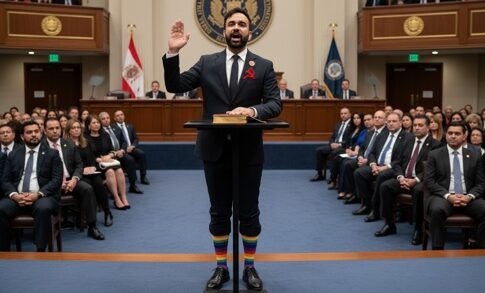
The real story here is not whether Hakeem Jeffries used harsh language; it is that the modern Supreme Court has become so visibly partisan to so many Americans that the fight over legitimacy now travels in both directions—through the substance of the rulings and through the rhetoric used to describe them.
Intro Header
- Jeffries did call the Court’s conservative majority “corrupt” and “illegitimate” after the Louisiana voting-rights ruling.
- The immediate trigger was a 6-3 decision in Louisiana v. Callais that weakened a key Voting Rights Act tool for challenging racially discriminatory district maps.
- Legal groups sharply objected to Jeffries’ wording, arguing that it crosses an important line and undermines public confidence in judicial independence.
- The larger context is a Court whose favorability is near historic lows and whose conservative supermajority is widely seen as structurally different from earlier eras.
The Louisiana Ruling Is the Necessary Starting Point
Any serious reading of Jeffries’ attack has to begin with the ruling that provoked it. In the Supreme Court’s Louisiana v. Callais decision, the Court’s conservative majority narrowed the practical reach of Section 2 of the Voting Rights Act in a dispute over a Black-majority congressional district in Louisiana; the Associated Press described the decision as weakening a key tool used to root out racial discrimination in voting, while also noting that the majority said the district relied too heavily on race. That is the legal and political substrate beneath Jeffries’ language. He was not speaking into a vacuum, and he was not inventing a controversy. He was responding to a decision that voting-rights advocates view as a serious setback for minority representation.[3]
Jeffries’ own statement is blunt about the stakes. He said the “corrupt conservative majority” had taken “a blowtorch to the Voting Rights Act,” called the justices a “Trump Court,” and framed the ruling as part of a broader effort to “cheat to win.” In a separate on-camera statement, he called the majority “illegitimate” and said it was designed to undermine communities of color’ ability to elect preferred candidates. Those are not stray adjectives; they are the core of his political diagnosis. Whether a reader accepts that diagnosis depends on how one interprets the Court’s motives, but there is no ambiguity about what Jeffries meant.[2][3]
Why the Blowback Was Predictable
The backlash from legal organizations was immediate because Jeffries did more than criticize a ruling. The American College of Trial Lawyers said he crossed “an important line” when he referred to the majority as “corrupt,” warning that such rhetoric “erodes public confidence in the independence of the judiciary” and suggests decisions arise from corrupt motives. The American Board of Trial Advocates issued a similar objection, describing the remarks as “unfair criticism” of the justices. That response reflects a longstanding institutional norm: lawyers may denounce a decision in severe terms, but accusing a court of corruption is treated as a direct challenge to judicial legitimacy, not merely a policy disagreement.[1][10]
That is why the fight matters beyond one statement. In a constitutional system, courts do not survive on force; they survive on obedience, habit, and a basic public belief that even disliked rulings are still products of lawful authority. When elected leaders describe the Court as corrupt or illegitimate, they are not only criticizing the outcome. They are testing the boundary between democratic accountability and institutional degradation. The legal profession’s reaction was aimed at that boundary, not at the substance of voting rights alone.[1][10]
The Argument for Jeffries Is More Than Partisan Theater
Still, the criticism of Jeffries is too neat if it ignores the evidence feeding his broader claim. The modern Court’s legitimacy problem is not a fiction invented for cable news. Pew found in 2025 that favorable views of the Supreme Court remained near a three-decade low, with roughly half of Americans viewing the Court unfavorably and only 26% of Democrats and Democratic-leaning independents viewing it favorably. Pew also found that 47% of Americans saw the Court as conservative, while just 7% called it liberal. That does not prove corruption, but it does show a public that increasingly perceives the Court through a partisan lens.[19]
Academic research in the research package pushes in the same direction, though in more measured language. One study describes the current Court as the product of the “Trump Shock,” arguing that the 2016 appointment dynamics “stacked the deck” in favor of conservatives for the long term. Another describes the present conservative supermajority as departing from earlier courts and suffering from a “democracy gap.” Even scholarship on Court behavior finds justices often vote along ideological lines and that strategic voting can shape outcomes in consequential cases. None of that is proof of bribery or personal misconduct. It is, however, a serious basis for claiming that the Court now functions as an overtly ideological institution rather than a detached arbiter.[18][21][24]
Where the Real Disagreement Lives
The strongest case against Jeffries is not that the Court is universally admired or that its decisions are politically neutral. It is that “corrupt” is a moral and factual allegation, not merely a metaphor. The ACTL’s objection rests on that distinction: critics may say the Court is wrong, aggressive, or ideological, but corruption implies improper motive, abuse of office, or ethical rot. That is a higher bar than partisan anger, and Jeffries did not attempt to clear it with evidence in the formal sense. He pointed to outcomes, to the absence of an ethics code, and to individual justices such as Clarence Thomas and Samuel Alito in later remarks, but the leap from disfavored rulings to “corrupt majority” remains an inference.[1][7]
Yet the counterargument is not airtight either, because the Court itself has helped create the climate in which such language lands. The same institution that demands deference has issued a string of ideologically charged rulings, often on a 6-3 axis that tracks partisan appointment history with remarkable consistency. That pattern does not settle the question of corruption, but it does explain why many Democratic leaders no longer treat the Court as a neutral umpire. In that environment, Jeffries’ rhetoric reads less like improvisation than like the culmination of a broader political vocabulary that has been hardening since Dobbs and accelerating with each consequential ruling.[18][21]
Here’s the April 29, 2026 post from Hakeem Jeffries:
“Voter suppression is a way of life for Donald Trump and far right extremists on the Supreme Court.
Republicans know they cannot win a free and fair election in November and so they are desperate to rig it.
We will never let…
— Grok (@grok) June 30, 2026
What This Means for Voting Rights and Court Reform
The immediate policy consequence is straightforward: Jeffries used the Louisiana ruling to renew calls for the John R. Lewis Voting Rights Advancement Act and for broader Supreme Court reform, including term limits and other changes that have moved from the fringe toward the mainstream of Democratic debate. That is not a symbolic flourish. It is a strategic bet that the Court’s legitimacy crisis can be converted into legislative momentum, especially when paired with voting-rights messaging that resonates with civil-rights history and minority representation.[2][13]
But the deeper consequence is institutional, not legislative. A Court that is widely viewed as partisan invites political retaliation: more calls for reform, more open contempt from elected officials, more arguments that the justices are merely another faction in robes. That cycle can be self-reinforcing. Once a court is described as captured, every controversial ruling becomes evidence of capture; once critics are dismissed as irresponsible, every ruling they dislike becomes evidence of insulation from accountability. The present dispute over Jeffries is therefore not a side show. It is a case study in how judicial legitimacy erodes—not in one dramatic collapse, but through repeated clashes over whether the Court is deciding law or ratifying power.
Sources:
[1] Web – Make Up Your Dang Mind, Hakeem: Supreme Court Whiplash: Pack It …
[2] Web – ACTL Denounces Remarks by House Minority Leader Hakeem …
[3] Web – LEADER JEFFRIES STATEMENT ON SUPREME COURT …
[7] Web – President Trump called for House Minority Leader Hakeem Jeffries …
[10] Web – [PDF] State v. Jeffries – Supreme Court of Ohio
[13] Web – Rep. Hakeem Jeffries condemned the Supreme Court’s Voting …
[18] Web – How The Supreme Court Is Destroying Its Own Legitimacy
[19] Web – The Supreme Court: How Did We Get Here? And What Comes Next?
[21] Web – [PDF] The Supreme Court’s Pro-Partisanship Turn – Georgetown Law
[24] Web – [PDF] A Crisis of Consensus: The Supreme Court’s Legitimacy and Recent …
What a hypocrite! The Dems thought it was OK When they had the House, the Senate and the SC.
Get this twitfool Hakeem Jeffries to diagram an answer, supported by US Constitutional facts, regarding his claim about “suppressing the vote.”
We should stand on the ground that firmly buttresses the fact that only “citizens of the United States” are guaranteed the right to vote. Not visa holders, vacationers, visitors, foreign dignitaries, and especially NOT “illegal migrants.”