
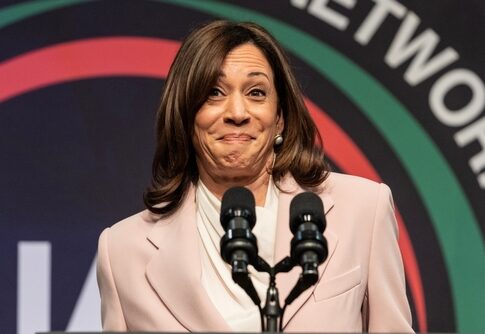
“Word salad” is not an analysis; it’s a frame. When a political exchange is clipped, labeled incoherent, and fed into a polarized media stream, many people judge the label before the words. The smarter question is whether the underlying claim carries substance and whether the setting rewarded clarity or performance.
The Short Version
- Accusations that Kamala Harris delivered “gibberish” in a Don Lemon interview hinge on style; the core policy through-line concerned press freedom and accountability for abuse of power.
- There is documented context: a CNN transcript summary notes the arrests of journalists Don Lemon and Georgia Fort tied to an anti-ICE church protest in Minneapolis, making press-freedom concerns germane rather than contrived [12].
- Political interviews are adversarial performances for an “overhearing audience”; clipped excerpts and hostile frames predictably drive perceptions of rambling or evasion, irrespective of content [17].
- In a polarized environment, hostile labels can actually increase ingroup trust in the politician, while outgroup audiences read the same answer as incoherent; both reactions are structural, not unique to Harris [16][24].
What Harris actually argued versus how it was received
The criticism that Harris produced a “word salad” during a Don Lemon sit-down focuses on rhetoric—cadence, clause-stacking, and digressions—rather than the backbone of her answers. In that conversation, Harris pressed two related claims: first, that democratic guardrails have frayed (voting rights, court norms, minority rule via the Electoral College), and second, that the Justice Department, in her view, had been bent toward personal ends and must be reoriented toward rule-of-law accountability. Framed that way, the through-line is clear even if individual sentences ran long. When the interviewer himself has been part of a recent press-freedom flashpoint, the relevance is obvious: a CNN transcript log for mid-June 2026 records that journalists Don Lemon and Georgia Fort were arrested in connection with coverage of an anti-ICE protest at a Minneapolis church, slotting the discussion in a live dispute over how far state power can reach into newsgathering [12].
Critics hear that constellation—voting rules, courts, DOJ—and perceive an overbroad, improvised sprawl. But equating a multi-issue critique with incoherence collapses substance into style. The structural incentives of televised talk make that collapse likely.
Why political interviews so often sound worse than they read
Televised political interviews are built for conflict-managed performance. Communication scholars describe them as interactions staged for an “overhearing audience,” with turn-taking constraints and topic control that favor questioners’ interruptions and framing moves. Interviewers can challenge without overtly abandoning neutrality by quoting critics or extending topics in ways that force reconfirmation of premises; the result is a dance that fragments long-form policy arguments into timed, defensible sound bites [17]. When a politician insists on a multi-pronged case—say, connecting DOJ norms to voting access and court reform—the format penalizes complex scaffolding. A two-clause answer risks being cut; a four-clause answer gets clipped later and relabeled “rambling.”
That editing-and-framing loop is potent. Once a short segment is stamped “word salad,” many viewers assess the tag, not the transcript. It’s why the same 30 seconds can reassure supporters (she’s fighting on our issues) and alienate opponents (she’s dodging again) without either side changing the text they just heard.
Polarization, perception, and the “hostile interview dividend”
Partisanship layers another filter. Experimental work on cross-partisan interviews finds that when a politician faces an “outgroup” media setting and is accused of dodging, their ingroup supporters often increase trust in the politician. The perception of media hostility itself—fair or not—functions as a cue for supporters to rally; appearing in that environment can be a net reputational win within the base [16]. Meanwhile, broader public trust in media has eroded under polarization, with large shares of Americans convinced coverage makes divisions worse; that environment primes audiences to read the same exchange through entirely different priors [24].
That is why the “gibberish” frame travels so quickly and does so little to persuade across lines: it mobilizes people already inclined to dismiss the speaker while hardening support among those who see the criticism as proof of bias. The net effect is heat, not light.
The press-freedom spine of the exchange
Set aside the label and the cadence. The load-bearing point Harris advanced was that power used to intimidate or punish journalists corrodes democratic accountability and should be checked. Whether one agrees with her broader agenda on court expansion, DC or Puerto Rico statehood, or Electoral College reform, that press-freedom claim stands on its own merits and on contemporaneous facts. A CNN transcript summary for June 2026 logs arrests of Lemon and Minnesota journalist Georgia Fort tied to reporting on an anti-ICE protest inside a church—precisely the sort of edge case where officials’ public-order claims collide with First Amendment newsgathering defenses [12]. That context is not a post hoc gloss; it is the predicate for treating the DOJ’s posture toward the press as a live, not hypothetical, matter.
Press cases at that boundary are legally and practically thorny—sanctuary-space claims, trespass law, and police orders intersect with journalists’ right to document events. But when high-profile arrests occur, calling for norm-guarding scrutiny of prosecutorial choices is not “word salad.” It is mainstream democratic rhetoric, shared by politicians who otherwise disagree on everything else.
Kamala Harris tells Don Lemon she will target Trump DOJ if elected president in '28 https://t.co/DKvx8MXf3y via @americanwire_
— Rich Sokerka (@NDalum71) June 20, 2026
Why “style critiques” keep winning the clip war
Calling a complex answer incoherent is easy to communicate and emotionally satisfying for partisans; evaluating whether the argument’s components cohere requires time and context. The television grammar of interruptions, limited turns, and forced concision accentuates false starts and clause restarts—especially when a guest tries to tie several institutions into a single causal story. Media-training literature even warns subject-matter experts to avoid overpacking answers for this reason: focus on three messages, bridge, and conclude—because anything more will be carved up and, potentially, caricatured [19]. Put bluntly, the format rewards the prosecutorial question and the crisp rebuttal, not the systemic diagnosis.
That does not mean every meandering sentence conceals brilliance—some answers genuinely wander. It means the presence of a wandering sentence is not dispositive evidence that no substantive argument exists beneath it. On questions of institutional power, short answers often mislead; long answers often frustrate.
A better test for coherence
Strip away the cadence and ask four questions. One, is there a discernible claim? In this case: yes—abuse of state power, particularly through the DOJ, demands accountability; voting and court structures that entrench minority rule should be reexamined. Two, is the claim moored to facts? Yes—the arrests recorded in contemporaneous coverage make press-freedom concerns concrete rather than abstract [12]. Three, does the argument link mechanisms plausibly? The through-line ties enforcement discretion and institutional design to democratic responsiveness; you can reject the prescriptions while conceding the logic connects. Four, does the setting impede articulation? Yes—adversarial, time-boxed interviews structurally disfavor layered arguments [17].
On that test, “word salad” reads less like a diagnosis and more like a partisan verdict on style. It tells you how the critic felt, not whether the policy spine held.
Implications for audiences and candidates
For audiences, the corrective is simple and unfashionable: lateral reading and transcript-first judgment. Watch the full exchange before absorbing the label; evaluate the claim that matters in your life (for instance, what would DOJ “accountability” mean in practice?). Recognize the format’s incentives toward conflict and compression. Acknowledge your priors—media skepticism, partisan loyalty—without letting them substitute for evaluation.
For candidates, the lesson is equally clear. If you intend to argue that democracy’s failures are interconnected, you still have to staircase the case in broadcast-friendly units. That means one mechanism per answer, crisp markers for transitions, and explicit connective tissue saved for long-form venues. Otherwise, opponents will do the editing for you and call the remainder incoherent. You cannot control the frame, but you can deny easy fodder for the “word salad” clip machine.
Bottom line
When a politician sounds sprawling, critics will always reach for “gibberish.” Sometimes that label fits. In the Harris–Lemon exchange, the spine of the argument—press freedom and accountability for power abuses—was squarely on-topic given recent journalist arrests, and the broader institutional critique was legible even if stylistically dense. The broadcast format made it easier to caricature complexity than to engage it. Listeners who care about substance should resist that shortcut and do the slower thing: parse the claim, then judge its merits.
Sources:
[12] Web – Here’s what @kamalaharris had to say to the Democratic …
[16] Web – Jimmy’s full interview with Don Lemon after his arrest…
[17] Web – 5 ways politicians benefit from really hostile media interviews – …
[19] Web – Why most politicians come across so badly in media interviews
[24] Web – On the nature of real and perceived bias in the mainstream media
You will never get any where with that type of EVIL thought. you will never become a president, you couldn’t handle the Vice President, so why do you think you could handle the president.