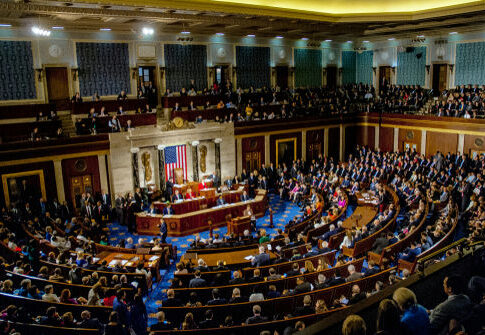
With public patience thinning and Congress signaling resistance, new polling shows support for continued Iran operations sliding beyond the Republican base, raising real war-powers and political challenges for the White House [2][4][7].
Polling Trends Undercut Broad Mandate For Prolonged Operations
Responsible Statecraft’s summary of a Reuters and Ipsos survey reported that only 27 percent supported recent strikes while 43 percent disapproved, with the rest undecided, reflecting a national environment skeptical of escalation [2]. A YouGov analysis similarly described rising opposition to the war itself, with overall resistance outweighing support, amplifying concerns among independents [4]. Pew Research Center reported broad disapproval of United States military action in Iran, reinforcing that the country is not rallying behind an open-ended campaign [7].
These numbers matter because lawmakers read them. Members in swing districts and purple states are especially sensitive to the pattern: independents are moving away while overall disapproval hardens [4][7]. The trend narrows room for blank-check authorizations and signals that any supplemental funding or expanded operations would face scrutiny. While national-security threats must be addressed, durable mandates require majority buy-in. The polling suggests Americans want clear objectives, limits, and accountability before risking deeper entanglement [2][4][7].
Republican Support Exists But Shows Signs Of Strain
The Reuters and Ipsos snapshot cited by Responsible Statecraft found that more than half of Republicans supported the initial attack, confirming a core partisan constituency for deterrence-focused action [2]. At the same time, YouGov reported slippage on Trump’s handling among Republicans, from earlier highs to a still-strong but diminished level, indicating softening rather than collapse [4]. That shift suggests grassroots conservatives back strength but expect discipline: defined aims, measured risk, and costs that do not burden working families grappling with inflation and high energy prices [2][4].
The same Reuters and Ipsos reporting captured the conditions that could flip support: forty-two percent said they would be less likely to back the war if United States troops are killed or injured, and forty-five percent would be less likely to support it if gas and oil prices rise [2]. Those thresholds map directly onto kitchen-table concerns. Conservatives who value peace through strength also insist on prudence, constitutional clarity, and protection of American livelihoods. Rising fuel prices or avoidable casualties would rapidly erode the coalition that currently tolerates limited action for deterrence [2].
Congressional Posture: Signals Without Hard Votes On Record
Media coverage emphasizes eroding support and questions about congressional authorization, but the available materials do not include specific roll calls, whip counts, or named-member tallies documenting defections or endorsements on Iran-related measures [2][4]. That gap matters. Assertions about “bleeding votes” remain speculative until floor votes, committee reports, or formal letters surface. Absent primary-source documentation, the best reading is that Congress is wary, monitoring polls, and pressing for clearer goals and legal grounding before signing off on expanded missions [2][4].
A Republican senator's decision to support a bill that would require President Donald Trump to get congressional support to continue the Iran war proved crucial Tuesday as the Senate voted to advance the measure. https://t.co/Xf9mMvunTK
— FOX 5 Atlanta (@FOX5Atlanta) May 20, 2026
Policy analysis from the Center for American Progress argues the United States emerged strategically weaker and questions the clarity of aims, reflecting a prominent critical view outside the right-of-center space [3]. Conservatives can agree on core principles even when disagreeing with that verdict: the mission must be tied to concrete objectives, backed by a transparent legal basis, and constrained to deter threats without drifting into nation-building or indefinite commitments. Without that discipline, support will continue to soften and Congress will harden oversight [2][3][4][7].
What Conservatives Should Watch Next
First, watch for a formal war-powers notification package or legal memorandum that defines objectives, scope, and limits; a clear framework can stabilize support among fair‑minded skeptics [2][3]. Second, track gasoline prices and casualty reports, because either shock will move public opinion quickly and narrow congressional room to maneuver [2]. Third, look for actual votes on authorizations or funding. Until the House and Senate go on record, claims about momentum are narrative, not math—and narratives shift fast when facts land [2][4][7].
Sources:
[2] Web – Trump’s war on Iran is already losing the home front
[3] Web – What America Has Lost in the War With Iran
[4] Web – Trump is losing support from Independents over Iran – YouGov
[7] Web – Americans Broadly Disapprove of U.S. Military Action in Iran
I still do not understand the excuse of market price for oil in the US. We should see no rise in price as we are energy independent. We do not have to allow price spikes due to the market. We are at war and can control pricing. if the oil companies need more money we have provided more business to the world in need of oil. They can charge world high prices for oil. But we should not let the market excuse work against us when we are not using middle east oil. I know I am not crazy do you agree with me?